Middleburg Film Festival saved one of its most stirring selections for the Sunday night closing slot. With "Being Heumann," Siân Heder follows up her Best Picture winner "CODA" with a look at disability rights activist Judy Heumann and the fight to get Section 504 of the Rehabilitation Act enforced.
On paper, that sounds like a dry piece of history: a fight over implementing a single provision of a federal law. On screen, "Being Heumann" plays as a vibrant biopic crossed with a historical issue drama, and its importance to the lives of millions is plain to see. Section 504 barred discrimination on the basis of disability in federally funded programs, but four years after it became law, the regulations needed to enforce it still hadn't been signed. In 1977, Heumann and her fellow activists took their demand to San Francisco's Federal Building and refused to leave. Mark Ruffalo plays Joseph A. Califano Jr., the Secretary of Health, Education, and Welfare whose signature they needed.
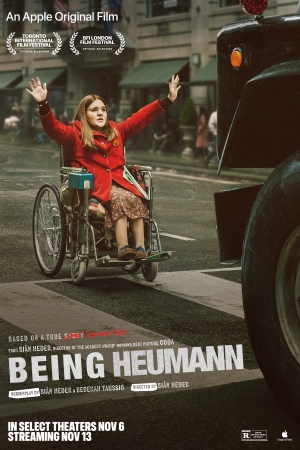
The film's greatest strength is its casting. Ruth Madeley plays Heumann with an authenticity drawn from her own lived experience, and she infuses Judy with the energy and heart that reflect the real woman's spirit. At no point is she confined to a single dimension. Her Judy also sets the film's temperature, which rises and falls with her temperament: by turns heartwarming, serious, and acerbically funny.
Around Madeley, Heder assembles a representative ensemble of actors with disabilities, rather than simply relying on non-disabled actors playing disabled roles. Middleburg's Special Achievement in Casting Award for Bernard Telsey and Adam Caldwell is well earned, given the lengths the film goes to in building that ensemble. That authenticity extends behind the camera: Heder co-wrote the screenplay with Rebekah Taussig, a disabled writer and the author of the memoir "Sitting Pretty."
Madeley is well supported. Madeline Delp's Kitty Cone, Heumann's fellow organizer, provides a softening balance to Judy's abrasive style; she's the velvet glove to Judy's iron fist. Ruffalo makes Califano more than a bureaucratic obstacle, playing a man sympathetic to the intent of Section 504 but too entrenched in Washington's political realities, and too wary of its cost, to act on that sympathy. Rob Delaney, as Congressman George Miller, and Michael Patrick Thornton, as disability rights pioneer Ed Roberts, get limited screen time despite their consequential roles in the larger story.
Just as important, the film never reduces its protesters to caricatures of pitiful existence, nor does it beatify them as saints. Each is realized as a person navigating life with their own unique challenges. One richly textured scene during the sit-in finds the group infighting as the practical needs of one disability compete with another's for support and attention. Among the flashpoints: curb cuts, a boon for wheelchair users and a hazard for blind people. The film recognizes that even within this coalition, solidarity takes negotiation.
Heder builds the film's 1970s world effectively without tipping into obvious period kitsch, and supports it with contextually appropriate music, including a lovely moment of the protesters singing Three Dog Night's "Joy to the World," led by the sit-in's real-life morale officer, Dennis Billups (Charlie Rush-Reese). The period detail is convincing enough that it takes a keen eye and a Northern Virginian's knowledge of local roads to catch the film's one wristwatch-on-a-Roman-soldier moment: as the activists ride in from Dulles, an establishing shot shows a Route 267 sign, five years before the route officially existed.
The film's historical world-building extends beyond sets and soundtrack. Through Brad Lomax (Antwan Tolliver) and Chuck Jackson (Ray Fisher), Heder gives real attention to the Black Panther Party's support for the sit-in, from the hot meals that sustained the protesters to the truck that carries them into Washington. In doing so, she sheds light on a side of the Panthers that history tends to overlook: their work as a social services organization.
Like many films based on true events, "Being Heumann" may play a little loose with the record, and it clearly takes a side. It stops short of full hagiography, but there's no question where its sympathies lie: with Judy and her fellow protesters. In the long view of history, that's the just side. And the film never pretends to be a documentary, despite its creators drawing plenty of inspiration from "Crip Camp," the Oscar-nominated documentary that covers the same sit-in. The film's portrayal of law enforcement, at least, tries to cover all sides. Some officers come across as enthusiastically authoritarian, others as simply doing their jobs, and two of the building's guards are sympathetic to the cause. The harsher portrayals likely have some historical roots, and some may be there for the sake of dramatic tension.
The arc of reporter Evan White (Dylan O'Brien) is also underdeveloped. He goes from broadly uninterested in understanding or engaging with the protesters to full-on ally remarkably quickly. The film doesn't even reach for the familiar opportunistic-reporter trope; he simply switches to their side. That's unfortunate, because Heder ultimately gives White a key confrontation with Califano, drawn from real events, and the strength of that payoff only highlights how thin the buildup is.
The film's most awkward stretch is its move from San Francisco to Washington. After the contained world of the federal building, the story detours into something close to a road comedy before the activists set up outside Califano's house. It's less a lag than a change of gears the film never quite smooths over.
Heder ends the story at its natural climax, with the signature that puts Section 504 into effect, then pivots to closing title cards noting how Heumann went on to tackle disability issues for the rest of her career. It's a fitting choice: the victory at the sit-in wasn't an ending, but the beginning of a lifetime of her leadership in the movement. That history has a contemporary echo, too: in recent years, a coalition of states has challenged federal regulations implementing Section 504 in court.
All told, the film is well made, crafted by people who want to tell this story with care and to honor its subject. It isn't dripping in spectacle, and it isn't a groundbreaking new filmgoing experience. Its most impressive work is somewhat invisible, and an achievement unto itself: the casting creates a believable, natural group of protesters in circumstances that were extraordinary for their time. "Being Heumann" may not leave a lasting mark of its own, but the chapter of American history it tells deserves to be far better remembered.
"Being Heumann" opens in select theaters November 6 and streams on Apple TV beginning November 13.
Read more from Casting Directors Adam Caldwell and Bernard Telsey in our Middleburg Film Festival 2026: "The List Is Maybe Four People Long": Adam Caldwell and Bernard Telsey on "Being Heumann" Q& A Recap
| Movie title | Being Heumann |
|---|---|
| Release year | 2026 |
| MPAA Rating | R |
| Our rating | |
| Summary | Ruth Madeley leads a richly human ensemble of actors with disabilities in writer-director Siân Heder’s well-made account of the sit-in that turned access into a civil right. An awkward detour to Washington and a thin reporter subplot keep it from greatness, but its casting is an achievement unto itself. |