Middleburg Film Festival 2026: "Smellier, Louder, Dirtier." A Q&A with the Makers of "Wicker" on Craft, Comedy, and a Fable Turned Romance
By Stuart Shave
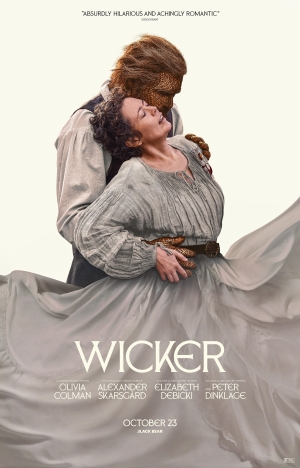
Following a screening at the Middleburg Film Festival, directors Alex Huston Fischer and Eleanor Wilson, joined by lead star Olivia Colman, engaged in a lively Q&A that took audiences inside the making of "Wicker" and traced how Ursula Wills's short story became a tactile, deeply romantic film. For film lovers looking beyond the screen, here are the major takeaways and direct insights from the conversation.
Some of what they shared includes plot spoilers, so if you have yet to see the film, read at your peril!
If you haven't seen the film yet, you may prefer our spoiler-free review.
Expanding "Morsels" into Narrative Set Pieces
Adapted from Wills's short story "The Wicker Husband," the film owes much of its charm to single lines the filmmakers expanded into full scenes.
- The Infamous Broken Bed: "There's one line that says after their first night of marriage, the wicker husband said, 'The bed is broken. Bring me a chisel, I will fix it,'" Fischer said. "That's all it says in the short story... there were just so many little morsels like that that we just really latched onto and had so much fun writing."
- From Cautionary Fable to Sincere Romance: Wilson said the original story was primarily a cautionary fable about envy, and the film still is one, but writing it revealed a love story: "We also sort of discovered in the writing of it that we really fell in love with these two characters, and the romance really shot through in a way that was even surprising to us."
Minimal VFX, Maximum Texture
A major talking point during the Q&A was the decision to keep visual effects (VFX) to a minimum in favor of practical, physical artistry.
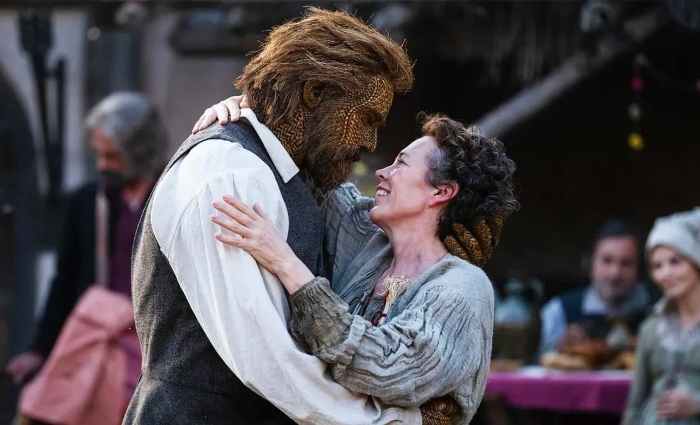
- Practical Wicker Suit: Fischer and Wilson were first told the suit would lean heavily on VFX. They then partnered with New Zealand's famed Weta Workshop to build Alexander Skarsgård's suit. Fischer said Weta's Joe Dunckley quickly eased that concern: "Don't worry, we're going to do very minimal work." Wilson remembered asking how much VFX they'd have to do, only to be met with bafflement. "What do you mean? We're making this! We don't have to do VFX," Dunckley told them. Wilson continued: "Obviously we did do things like making him hollow, and after he's burned and comes out of the forest half of his face is missing and his arms - that was obviously VFX in addition to this practical suit." Skarsgård would go on to spend eight to 10 hours a day sealed into the suit and layered in prosthetics, yet still delivered a calm, grounded performance.
- A "Smellier, Louder, Dirtier" World: Asked how the script read on the page, Colman said the finished film outdid her imagination: "They made it so much better than I had imagined. I've got quite a good imagination, but they made it really sort of smellier and louder and dirtier."
- Colman as Puppeteer: The wicker baby was a part-animatronic, part-practical puppet, built by Weta Workshop from photos of the directors' own child. During the Q&A, Fischer revealed a behind-the-scenes detail from the film's emotional climax: "When Olivia comes in totally devastated holding the baby to be reunited with the wicker husband... she's holding a little rod and puppeteering the baby at the same time as acting."
- A Real Tear: Fischer pointed to the beat that follows: "She looks back at Peter Dinklage, and he says [the wicker husband is] not going to last forever. She comes back toward camera, single tear. Single choreographed tear, that's real, not CG."
Comedy, Intimacy, and Baring It All
Colman and the directors credited their intimacy coordinator with making the film's physical comedy and love scenes feel safe, expressive, and fun.
- Choreographing Vulnerability: "A really good intimacy coordinator gives you the courage to do much more than you would without and feel totally safe while doing it," Colman explained. "She turned it into a dance routine... it makes it safe and enjoyable and fun."
- Shooting the Bed Gag: Colman said her on-screen laughter was real: "We've got two guys ready to pull the legs out from under you... the adrenaline of knowing it was going to happen, then the laughter that you get is genuinely me... it was so shocking and so funny."
Marriage Vows and Satirizing the Patriarchy
The thematic richness of "Wicker" grew naturally out of the filmmakers' real lives and social observations.
- Personal Connections: Newly married when they wrote the script, Fischer and Wilson found themselves processing their own wedding experience, as Fischer explained: "It's kind of bold to write a takedown of the whole institution of marriage when you have been married about two months. We had just been working on our own vows a couple of months before we wrote... so you're just thinking about what is the point of marriage? Why do we do this?"
- Satirizing Local Conformity: The film creates an invented local culture where village women are named after their husbands' professions. Colman noted how deeply this dynamic resonated with her: "I loved the fact that none of the women have their own name, and they're all named after their husband's jobs, apart from the Fisherwoman... and all of these men AND women, Patriarchy doesn't look good on anyone."
Fielding the night's final question, what it's like to fall in love on screen with a wicker-covered Alexander Skarsgård, Colman answered with a grin: "I mean, it's not a difficult day at work."
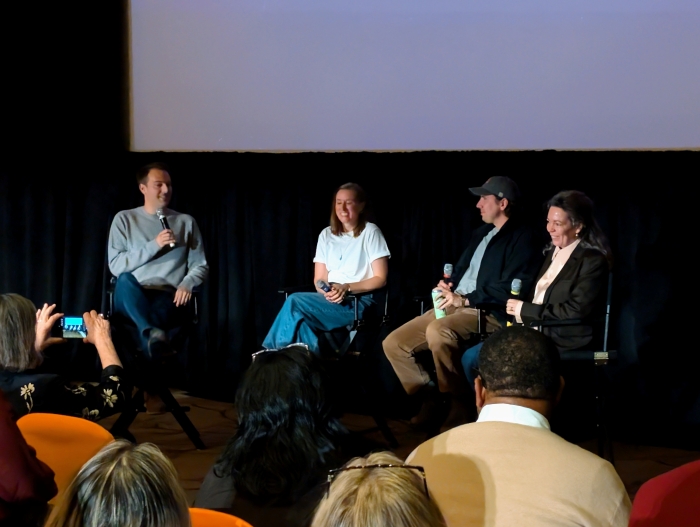
"Wicker" panel at Middleburg Film Festival featured filmmakers Eleanor Wilson (center l.) and Alex Huston Fischer (center r.) and actress Olivia Colman (right) and was moderated by David Canfield of The Hollywood Reporter (left). (Photo credit: Stuart Shave)