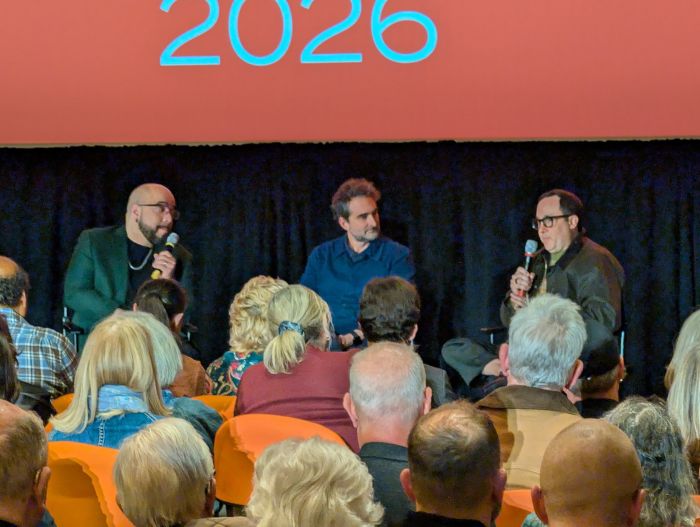
Following a screening at the Middleburg Film Festival, Jay Duplass and P.J. Byrne took audiences inside the making of "I Play Rocky," from the responsibility of portraying Hollywood legends to the experience of watching Anthony Ippolito transform into a young Sylvester Stallone.
Complementing our review and separate interview with Duplass and Byrne, here are the major takeaways and direct insights from a conversation about recreating a beloved film's beginnings - and finding renewed faith in moviemaking along the way.
Want to go a few more rounds with "I Play Rocky"? Check out our full review of the film, and Stuart Shave's interview with actors Jay Duplass and P.J. Byrne.
"It's a very daunting task to play the legendary Irwin Winkler," Byrne told the audience at the post-screening Q&A.
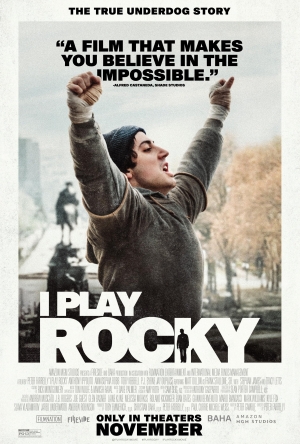
For Duplass, playing "Rocky" director John G. Avildsen came with a different kind of pressure: "Rocky" is his favorite movie, and recreating its production sometimes left him struggling to keep his emotions out of the scene.
"I was genuinely tearing up on set. I had to pull myself together to do the takes."
Duplass's earliest memory of "Rocky" involved watching from his mother's lap at a drive-in. His initial understanding of the story was somewhat limited.
"I thought it was a movie about a man who was a friend of turtles."
Some 30 viewings later, his attachment had deepened considerably. When he learned that a film about its making was underway, he wanted to direct it. Reading the screenplay revealed another possibility: playing the independent filmmaker trying to get "Rocky" onto the screen with little room for extra takes.
"I was like, ‘That's me.'"
Duplass obtained director Peter Farrelly's email address and eventually pitched himself by phone.
"I was just like, ‘I know everything about this. I'm your guy.' I think I had it in the first thirty seconds, but after fifteen minutes he's like, ‘You got it.'"
He also has tongue in cheek (but one which you imagine he would take totally seriously) title ready for his version of the assignment:
"I Play Avildsen."
Byrne's preparation included visiting Winkler at his Beverly Hills home. A wall of photographs with major stars offered a substantial reminder of the career he would be representing.
"It's the house that ‘Rocky' built. ... He's an absolute legend, and you want to get it right."
Meeting the producer made the responsibility personal.
"You don't want to let this legend down."
Rather than leaning into a larger-than-life Hollywood personality, Byrne concentrated on the watchful side of producing: observing, assessing risk, and keeping the work on course. The restraint brought an unexpected payoff.
"It's the most grounded performance I've ever had in my life, and it's wildly getting some of the biggest laughs I've ever had, which is a bizarre, interesting experience as well."
Duplass did not meet Avildsen's family, but he found plenty of footage of the director discussing his work.
"John Avildsen, as you might imagine, has a lot of tape on himself on the internet. He really liked to talk about his movies and making movies, and so I was really able to watch a ton of stuff."
The personality he found combined confidence and combativeness with an emotional commitment to the material.
"He's just a very cocky guy, and very bullish about what he wants, but it's all about heart."
Playing that tougher exterior could be difficult when Duplass's own response to the experience was so emotional.
"It was an incredible cosplay for me ... to cosplay-direct my favorite film, to go to these locations."
He also saw a connection between the actors Farrelly assembled and the people whose story they were telling.
"It just felt like we were honoring the original process and what they originally created."
Byrne recalled hearing Ippolito as Stallone at the table read. What impressed him went beyond the familiar voice.
"Everyone does a version of Sylvester Stallone. ... It was so grounded and honest and heartfelt, just his first words. It was beautiful."
He described the experience of becoming an audience member while working opposite an especially compelling actor. With Ippolito, that feeling went further.
"We're doing a scene and you're watching it, and you're involved and you're playing with him, but you're like, ‘Did Sylvester Stallone travel through space and time to be in this scene with us?'"
Then Farrelly would call cut. Ippolito would drop the character, return to his regular voice, and start discussing dinner. Byrne imitated the abrupt shift in a high-pitched voice:
"All right, so ... maybe we'll get steak tonight."
His reaction:
"Who is this?"
For Byrne, the contrast made the transformation even more striking.
"A lot of times actors will stay in character, and he just goes back to the regular kid."
Byrne said many scenes were completed in a single take, drawing a parallel with the original "Rocky." Farrelly's readiness to move on could catch him off guard, particularly when the actors had just improvised.
"There were times where ... we would riff or improvise a line, like, ‘All right, we got it, moving on.' I was like, ‘I just did that once, and you just heard that line for the first time in your life! Like, you at least want to change the angle, you're sure we got it?'"
For Byrne, that decisiveness reflected Farrelly's understanding of how the scene would fit together.
"He's editing as he's going, that's a true auteur while it's happening."
Byrne recalled seeing the film about six weeks after shooting finished - an "incredibly rare" turnaround. With his memories of the work still fresh, he could recognize the takes Farrelly had trusted.
"You're watching the movie like, ‘Oh, here comes this part,' and you're like, ‘Oh, that's one take, he was right. He was right, we don't need a different angle, it was perfect.'"
For Byrne, playing Winkler brought the role of a good producer into focus: someone who absorbs the difficulties so others can concentrate on their work.
"They are your ultimate backstop. They are there to just observe and put out fires and make you feel like everything is fine so that you can ... produce your art."
Duplass described finding a similar sense of support on "I Play Rocky," after a difficult year and some tough jobs.
"This one was just one of those jobs where everybody there was there because they wanted to be there and was giving everything that they possibly had."
The experience restored something those tougher jobs had worn down for Duplass.
"It really, really renewed my faith in making art and believing in the impossible."
Byrne's hope for younger audiences likewise emphasized not just individual determination, but the importance of having people in your corner.
"If you put in the hard work, and you believe in yourself and you surround yourself with like-minded people that believe in you, truly anything is possible."
Duplass offered a simple explanation for why "Rocky" remains his favorite film. When people question the choice, he asks them who wins the final fight.
"Of course Rocky wins."
His response:
"Well, then you need to rewatch ‘Rocky I,' because then you will know what this film's about."
For Duplass, the story behind that film offers its own reason to believe.
"The thing that is so special about it to me is that ... it's not fiction. It's real!"