"Ha-chan, Shake Your Booty!" begins in grief but has little interest in behaving like a conventional grief drama. Josef Kubota Wladyka's busy, buoyant, occasionally unruly film follows Haru (Rinko Kikuchi), a Tokyo woman struggling to reenter ordinary life after the death of her beloved husband and dance partner, Luis (Alejandro Edda). Its title promises cheek; its subject supplies pain. The surprise is how often the movie finds room for both, allowing mourning to be awkward, sensual, absurd, and intermittently ecstatic rather than a prolonged exercise in tasteful suffering.
Haru's loss takes a specific, culturally freighted shape. She has not only lost Luis in life, but also feels unable to help him arrive in death according to Japanese custom after his father takes his body to Mexico for burial. She descends into a months-long depression, withdrawing from family and friends, her dog, and her love of dancing. Throughout this ordeal, Kikuchi covers a daunting range of feeling - familiar love, devastation, and frustration - and that is before Haru meets the very attractive new dance instructor Fedir (Alberto Guerra), who brings embarrassment, wary desires, flashes of anger, and ultimately hard-won pleasure. Those shifts could seem like a collection of separate acting assignments, but Kikuchi navigates each with commitment and anchors what might otherwise be a maddeningly unstable film.
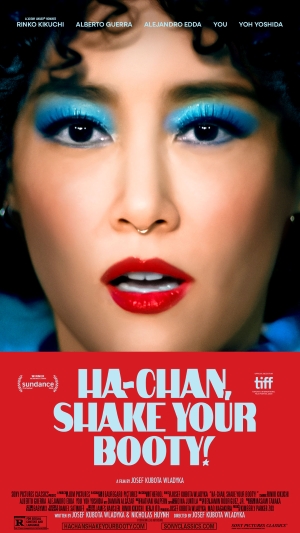
Kikuchi does not carry the film alone. Veteran actress You brings a brash comic energy as Haru's cousin Hiromi, who, alongside Haru's more patient and reserved sister Yuki (Yoh Yoshida), eventually coaxes her back to the studio. Together, they suggest an agreeably loose devil-and-angel pairing as Haru reengages with the world.
Haru's attraction to Fedir - and her confusion about his open marriage - is handled with particular candor. The situation initially plays as a source of confusion and comedy as Haru has to work out what, exactly, an open marriage entails, but it also permits the movie to treat adult desire without reflexive judgment. Her attraction is neither a betrayal of Luis nor proof that she has efficiently "moved on." It is another unsettled expression of a life continuing before she has fully learned how to live it. Guerra has the charisma and physical confidence required of a dance instructor who can upend Haru's emotional equilibrium, and he shares persuasive chemistry with Kikuchi throughout.
It is a startling and remarkably graceful pivot for Wladyka, whose previous work in hard-edged crime thrillers like "Catch the Fair One" gives little hint of his flair for vibrant, music-driven comedy. Cinematographer Daniel Satinoff's camera stays comparatively still and measured during Haru's isolated, grief-bound scenes, then opens up during the ballroom sequences, where editor Benjamin Rodriguez Jr.'s cutting loosens into something closer to the rhythm of the dancing itself. Nathan Halpern's score tracks that same split, receding into quiet during the domestic scenes and swelling in the film's more ecstatic and fantastical passages. Choreographers Chikako Takemoto and Miri Murano deserve real credit, too: several principal cast members arrived with little to no ballroom-dance background, and the numbers never betray it.
The film's fancifulness is also a counterbalance to the familiar heaviness of cinematic mourning. Wladyka periodically lets Haru's inner life fill the frame, using fantasy, surreal comic imagery, and heightened dance passages to make loss visible without reducing it to speeches about healing. The most persuasive example is the giant black bird associated with Luis's soul, an unwieldy, uneasy presence that makes grief feel less like a private abstraction than something capable of following Haru through her daily life. If the dance scenes suggest the possibility of release, the bird suggests the opposite: a love and a loss that remain stubbornly, irrationally present.
At times, the movie's flourishes risk making its grief feel packaged rather than experienced, and its various subplots compete for attention. Still, the tone is more often a virtue than an evasion. "Ha-chan, Shake Your Booty!" understands that mourning is not consistently dignified, eloquent, or even sad in the way movies expect it to be. It can be humiliating, horny, funny, and badly timed. The movie's occasional excesses are part of its attempt to make room for all of that.
Wladyka's film may strain to hold all of its ideas at once, and not every gamble pays off. Yet its central performance gives it a vibrant pulse. Across widowhood, family strain, cultural dislocation, and a hard-won rediscovery of desire, Kikuchi makes Haru's dancing, longing, resentment, and tentative return to pleasure feel inseparable - parts of one unresolved life rather than a checklist of themes. "Ha-chan, Shake Your Booty!" is too busy and strange to be a tidy healing narrative, and that untidiness is the point. It may be imperfect, but it is a generous, interesting, and genuinely moving film, and Kikuchi's performance alone makes it worth seeking out.
| Movie title | Ha-Chan, Shake Your Booty! |
|---|---|
| Release year | 2026 |
| MPAA Rating | R |
| Our rating | |
| Summary | This genre-defying grief comedy about a Tokyo widow who rediscovers herself through ballroom dance is anchored by a remarkable Rinko Kikuchi performance, and while director Josef Kubota Wladyka’s surreal, culturally-specific take on mourning doesn’t always cohere it’s still a generous, imperfect film that’s well worth seeking out. |