If you try to start a writeup on Cary Elwes using the phrase "...best known for..." be prepared to spend a good 10 minutes scratching your head as you pour over the actor's staggeringly lengthy and impressively varied list of credits, any number of which - "The Princess Bride," "Saw," "Robin Hood: Men in Tights," "Glory," "Kiss the Girls," "Lady Jane," Psych, and Stranger Things, to name just a very few - have brought the actor to prominence at various times and with a diverse range of audiences. Ahead of the release of Mr. Elwes's latest film, "Dead Man's Wire" - a tense, tragicomic take on a stranger-than-fiction true crime hostage standoff in 1970s Indianapolis helmed by director Gus Van Sant - Big Picture Big Sound's Stuart Shave had the opportunity to talk with him about how he approached his role as a wry, world-weary police detective, and the experience of working with Mr. Van Sant.
*********************************
In "Dead Man's Wire," director Gus Van Sant recreates the 1977 Tony Kiritsis crisis with a sharp eye for period detail and a chilling sense of dread. Amidst a powerhouse cast featuring Bill Skarsgård and Colman Domingo, Cary Elwes delivers a crucial, grounded performance as Detective Michael Grable, the law enforcement officer uniquely qualified to handle the unprecedented "dead man's wire" standoff. We spoke with Elwes about his deep research into the Grable family archives and the challenge of balancing authority with absurdity in a media-fueled pressure cooker.
Big Picture Big Sound: "Dead Man's Wire" is a gripping take on an almost unbelievable real-life event. Detective Grable was unusually prepared for this crisis due to his own initiative in seeking training, and he also had a prior relationship with Tony Kiritsis. How did you approach playing a man who has to negotiate with - and potentially eliminate - someone he personally knows?
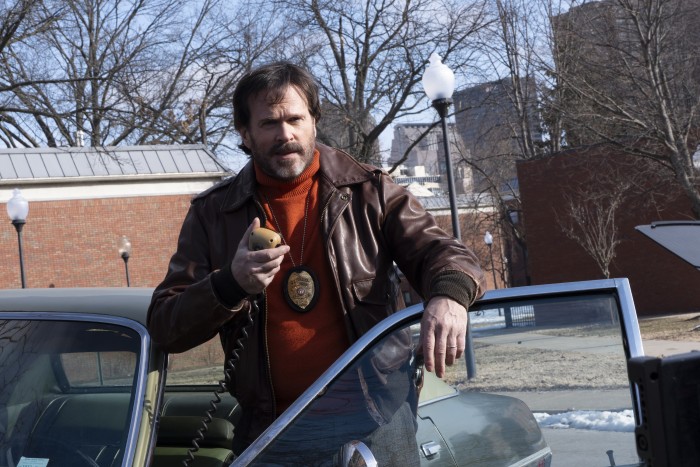
Cary Elwes: Oh, well, that's part of the job of being a police officer. Yeah, I was very fortunate in that I managed to connect with my character's two surviving children - Mike Jr. and Jason - in Indianapolis, and they shared with me all of their family archives about their dad: audio, visual, diaries, notes, family albums. And I made them fill out a questionnaire, mainly about his behavior and his relationships with people. And they told me that he had a great history with Tony, that he thought this guy was insane from the minute he met him. But also that he took his work very seriously as a detective. Even though he was an undercover narcotics detective, he did, as you say, take an FBI hostage negotiation course - the only one in the Indianapolis Police Department who did that. So he was actually uniquely qualified to deal with the crisis when it happened. But he felt that Tony was just nuts and that they should have taken care of him the minute he took this poor man hostage.
BPBS: You mentioned using audio recordings of the real Grable. Is that how you developed that specific accent for the role?
Cary Elwes: Yes. For me, it's like I have to do that. I had my AirPods in and I had Mike basically playing in my head all day long so that the minute they told me they were ready for me, I would just take them out and keep that voice going all day. So basically, being in neutral so I didn't have to be in park and then go into drive, if you know what I mean.
BPBS: Working with Gus Van Sant on such a high-tension story, was there a specific piece of direction that helped you lock into the film's tone, balancing that intense dread with touches of dark humor?
Cary Elwes: Yeah, with Gus, it's all about, obviously, authenticity and being natural. And I think that's the reason he gets to work with great actors and he gets great performances out of them. For me, he gave me a note about three or four days into the shoot where he said, "Okay, I think I've figured out the arc for your character," which wasn't on the page. Which was that, given that Mike had a deep frustration with Kiritsis to begin with, he said, "You know, I'm going to make your arc parallel to Tony Kiritsis. So when Tony projects onto you his idea of taking over your power and marginalizing you, just as he felt he was marginalized by having the Chief of Police take over the investigation and the hostage negotiations, that you, Mike, will find a way to get your power back by the end of the picture. And we'll work on that." And so that was really a great note for me, that I had to acquiesce to this lunatic and basically bite my tongue and wait for the right moment to get my power back.
BPBS: Much of your performance takes place within the police command post. What was the dynamic like among that ensemble of actors as the standoff dragged on?
Cary Elwes: Yeah. So, like I said, I think that the note I got, both from the kids and from Gus, was that Grable had a deep frustration with the fact that the Police Department, and the lawyers, and the FBI were really giving too much power to Tony. Because they had actually never really dealt with this kind of thing before. And they certainly never dealt with a kidnapper who had a dead man's wire, where he had power over them to kill the hostage at any given moment, no matter what we were trying to do to end the crisis. But that he had to bite his tongue and just take his time and wait for the right moment to act. I was lucky - these actors that Gus hired to be in that negotiation room were terrific actors. They were all character actors who just brought their A-game. So the minute we all sat down in that room together, the energy was there; it was great. And he encouraged us to improvise, which was fun. Everybody knew who they were playing; it was really great.
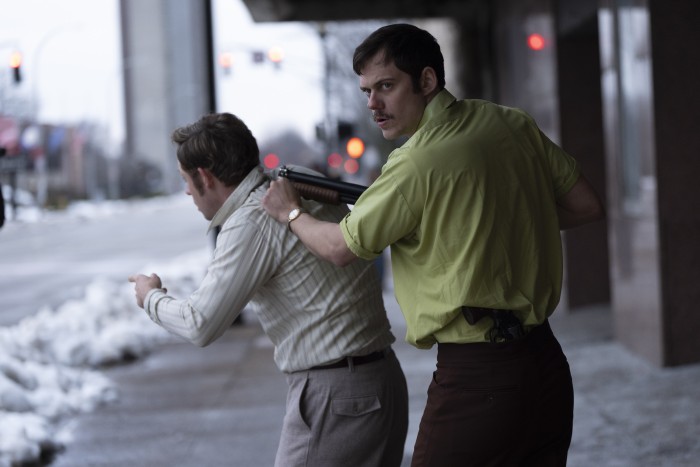
BPBS: The film leans heavily into the media circus of the era. Did the commentary on 24-hour news culture influence your decision to join the project?
Cary Elwes: Yeah, no, true. I was blown away when I read (the original press coverage) - I went to the Indianapolis Public Library, and they were very gracious and allowed me to access the digital microfilm of all the newspaper clippings from that period. I had no idea that Kiritsis had taken over the airwaves and interrupted the People's Choice Awards to air his grievances. I was blown away by that. And it's kind of very timely when you look at media today and reality TV. It's an interesting time to look at this period where this crazy individual was able to take over the airwaves. I don't think they'd ever get away with it today. So that was interesting to me.
BPBS: Across all the conversations you've had about this film, is there a detail or a human story about the production that you haven't had the chance to share yet?
Cary Elwes: You know, there was no difficulty, really. It was joyful. I really can't emphasize that enough. The film is not mordant at all; it has a lot of dark comedy to it, and it moves very fast. I think audiences will really enjoy that fact. It's a fast-paced picture that is dynamic and should be seen on the big screen, by the end of the day. And you should get to enjoy it with your friends and your family in a theater, as it's meant to be viewed. It was a joyful experience. I think that translates onto the screen; you'll see that. Everybody showed up with enormous passion and joy for their roles, and I think it shows on screen.
A huge thank you to Cary Elwes and the entire team at Row K Entertainment for their time and for sharing the story behind "Dead Man's Wire."