Some performances seem like a matter of life and death. Ian Charleson's last one actually was. "Elsinore," named for the castle where "Hamlet" unfolds, is directed by Simon Stone from a script by Stephen Beresford ("Pride"). It's an emotional and affecting story about a man trying to hold on just long enough to accomplish the thing he wanted more than anything else in life. Best remembered as Eric Liddell in "Chariots of Fire," Charleson was already gravely ill with AIDS in 1989 when he stepped into the National Theatre's production of "Hamlet" after Daniel Day-Lewis withdrew. He died less than two months after his final performance, at just 40.
Andrew Scott is superb as Charleson, pulling off a delicate balancing act across those final months. During the post-screening Q&A at the Middleburg Film Festival, Olivia Colman noted that every single person they spoke to about Charleson said he was hilarious, and Scott captures that humor well. The wit never fully goes out, even as the fear and agony of the diagnosis close in. And when he takes the stage, his readings of Hamlet's most famous soliloquies are truly excellent. You understand completely why this role was worth everything to him. It's a performance that deserves to be in the Best Actor conversation come Oscar season.
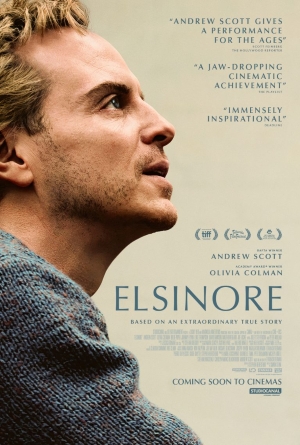
Colman's supporting turn as Charleson's physician, Dr. Margaret Johnson, is solid, if hemmed in by the writing. The real Johnson went on to pioneer HIV care in the UK, a legacy the film relegates to an end card. On screen, though, she's too often confined to a terse, buttoned-up character whose main job is to chide Charleson for putting "Hamlet" ahead of rest and treatment. There are moments when she's allowed to embrace what he's trying to do, but they come too sparingly. Colman does what she can, but the role asks her to scold far more than it lets her reveal.
Elsewhere, Billie Piper is very effective as Charleson's close friend, the casting director Patsy Pollock. She inhabits the role so completely that I didn't place her at first. Juliet Stevenson brings an added layer as Sylvia Syms, Charleson's Gertrude. Stevenson spent much of the 1980s as a leading lady at the Royal Shakespeare Company, so she knows this world from the inside. The casting also has some meaningful connections to Charleson himself. Johnny Flynn, who plays National Theatre director Richard Eyre, is a past winner of the Ian Charleson Award, the prize for young classical actors founded in his memory. And David Rintoul, who plays the Ghost of Hamlet's father, was Charleson's real-life best friend, which gives every scene between them an extra poignancy.
Stone and editor Valerio Bonelli lean heavily on montage, cutting between rehearsals, hospital visits, and eventually the performance itself. I found the approach broadly sensible from a pacing perspective, and in keeping with the film's tight focus on Charleson and the clock he's racing. The closing montage, which revisits moments we've already seen, has sparked plenty of debate over whether it's moving or merely manipulative, but I never felt played; given everything Charleson poured into those final performances, the emotion felt well earned. The downside of the style overall is that "Elsinore" sometimes moves a bit too quickly, skimming past moments that might have benefited from the camera lingering a little longer.
Mike Eley's cinematography, working hand in hand with Stone, delivers some genuinely interesting compositions. Together, the two make good use of the National Theatre's interiors and exteriors, along with locations around London, and the result is a visually engaging film that never gets distracted by its own cleverness. The color palette is a more intriguing puzzle. For a film set in the 1980s, it's surprisingly cool and muted. It might be setting a somber mood, or it might echo the pallor of illness itself. But it pays off in the contrast: outside the theater the world is washed out, while inside it the colors and lighting turn warmer and more vibrant. Wherever else Charleson is fading, on stage he comes alive.
"Elsinore" is also a strange, yet important, historical journey. With modern medicine, an HIV diagnosis is no longer a death sentence, and many younger viewers never knew the profound hold the epidemic had on the public psyche. The film makes that fear tangible in small moments, like a scene in which Charleson's first NHS doctor makes a point of washing his hands an extra time when there's no need to. That one gesture speaks volumes about the era. Even a line dismissing AZT as ineffective lands differently with hindsight: on its own, the drug's limits were real, but it later became a building block of the combination therapies that changed everything.
It's a prestige piece: a tragic tale with an uplifting dimension, anchored by a magnetic central performance. The film is, as Colman put it, "never meant to be glorifying his death." It celebrates what Charleson did with the time he had left. But "Elsinore" is so intensely focused on Charleson and the play that the material around him feels a little thin, even as the supporting cast makes the most of it. His friends and family get short shrift as the film keeps its laser focus on Ian, his work, and his decline. That's a shame, because a haunting scene with his parents, featuring Peter Mullan as a devastated father, hints at the richer film that might have been.
When Ian McKellen was handed the Evening Standard's best actor award the day after Charleson's final performance, he said he'd seen "the perfect Hamlet." "Elsinore" isn't a perfect film, but it's a moving tribute to a man who gave everything he had left to the role he loved most. In Andrew Scott, it has found the perfect actor to make us feel every bit of what that cost. Hamlet's final words are "the rest is silence." Charleson's Hamlet speaks again in "Elsinore."
| Movie title | Elsinore |
|---|---|
| Release year | 2026 |
| MPAA Rating | R |
| Our rating | |
| Summary | Andrew Scott delivers an Oscar-worthy turn as Ian Charleson, the dying actor who gave his final months to Hamlet, in a moving tribute that’s very good, if a little thin around its magnetic center. |