The new "Masters of the Universe" film is nothing if not well-intentioned. Watching it, you get the distinct impression that a child watching the infamous 1987 live-action attempt, now regarded by many as a cult classic, declared, "This isn't a He-Man movie," and made it their life's ambition to grow up and build a proper film about Eternia. In terms of fidelity to the source material, this iteration is one of the most unapologetic deep dives into fan service ever put to screen, gamely referencing even minor flourishes from the cartoon to reward the faithful. That loyalty extends to the vision of Eternia itself. While the world-building clearly relies on a massive amount of CGI, the film wisely rejects the drab, desaturated look of typical modern fantasy blockbusters. Instead, it leans into a bright, saturated palette that captures the vibrant spirit of a world where magic and sci-fi collide.
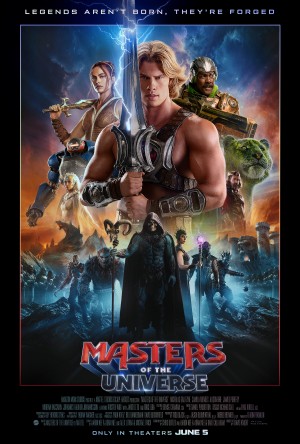
This aesthetic triumph is anchored by exceptional production and costume design, which translate the inherently absurd looks of the 1980s Mattel roster into impressive big-screen adaptations. You look at the screen and instantly recognize these characters; they feel like six-foot-five action figures brought to life. While the entire lineup is well done - including spot-on interpretations of secondary stalwarts like Fisto and Ram-Man - the cyborg henchman Trap Jaw stands out as a genuine triumph. He is brought to life with a menace and tactile detail that perfectly honors his animated roots.
Navigating the center of this neon-hued spectacle is Nicholas Galitzine in the dual title role. The writing puts him in a difficult position, trapping him between seriousness and silliness as he tries to anchor the heroic side of the narrative. For the most part, he holds the center, balancing the earnestness required for Prince Adam with the physical bravado of He-Man. Even if he doesn't shine quite as brightly as the flamboyant villainy across the aisle, his committed performance keeps the core of the film grounded. He is backed by a fine performance from Idris Elba as Duncan (aka Man-At-Arms), who commits fully to the role and showcases solid physicality alongside a strong emotional range. Elba tackles a broken, guilt-ridden mentor archetype and anchors the gravity of that messy recovery arc well. Unfortunately, his work is frequently undercut by story and script decisions, forcing him to pivot away from a grounded performance to deliver quips to a comic-relief battle robot voiced by Kristen Wiig. Ultimately, it's a film that wants to swing a sword and wink at it at the same time - and never quite figures out how to do both.
The broader supporting cast fares much better when allowed to lean fully into the madness. The wider cadre of legacy characters - Fisto, Ram-Man, Mekaneck, and the villainous duo of Trap Jaw and Tri-Klops - is embodied by a uniformly game supporting cast, all of whom wholeheartedly embrace the film's inherent silliness, creating a fun, energetic ensemble that carries the battle scenes. On the other hand, the upper tier of the veteran cast isnt as well served. Both Morena Baccarin, as the Sorceress, and James Purefoy, as King Randor, are wasted here, saddled with too little to do and left stranded on the sidelines of a narrative that has no idea how to use them. A scene clearly designed to be a critical, heartfelt moment between Adam and Purefoy's Randor demonstrates this perfectly by utterly failing to land, reinforcing the film's shifting register.
If the heroic faction feels disjointed, the absolute highlight rests safely on the dark side of the aisle, where the primary villains clearly understand the assignment and run with it. Jared Leto steals nearly every scene he's in, delivering a genuinely funny, beautifully hammy performance that proves he is fully in on the joke. Alison Brie matches him beat for beat as Evil-Lyn, fully committing to the theatricality with sharp, expressive work. While Leto does much of his work with his voice, Brie gets strong mileage out of her glances and glares, emoting with a hearty dose of camp to sell her character's menace. Together, they bring an infectious, self-aware energy that injects life into every frame they occupy - performances that feel like they belong to a version of the film that is fully aware of its own absurdity.
Alas, the film is severely held back by a wildly uneven tone that keeps it from ever truly finding its footing. It constantly wavers between earnest fantasy epic and self-aware parody, leaving the heroes particularly adrift. This tonal divergence really begins to take shape in Adam's experience on Earth, which conditions him toward seeking talk-first solutions instead of action-first ones. Intended as subversion, the idea instead stalls momentum and sets the narrative on a course that's split cleanly down the middle.
The film's technical execution compounds this unevenness. The digital effects often appear flat and poorly integrated, exposing green-screen seams, and undercuts the scale of the environments; meanwhile, the practical effects and prosthetics are genuinely impressive, grounding the character designs with a tactile weight and texture that the CGI sorely lacks. It's a movie that's brilliant in parts and uneven as a whole, with strengths and weaknesses that coexist rather than cohere.
Behind the camera, Travis Knight delivers a reasonably well-directed blockbuster that keeps its massive lore moving at a brisk, energetic pace. The narrative drive rarely feels sluggish, even if the grand-scale action scenes are choreographed merely adequately within a modern Hollywood context, getting the job done without reinventing the wheel. Complementing this energy is an orchestral score by Daniel Pemberton that balances modern bombast with winking nods to the classic 80s sound, evoking the heroic, synth-infused grandeur of the "Flash Gordon" soundtrack, especially via Brian May's guitar work that threads a similar nostalgic wire through both scores. While it may not stick in the brain like his most distinct work, the main theme is quite catchy, and he weaves in passages of the classic '80s cartoon theme to give the legacy moments a nostalgic swell.
This is where the film finds its most consistent strengths: brisk direction, a rousing score, bold production design, and a cast that largely understands the assignment. Yet even these virtues can't fully overcome the tonal and technical divides that keep the movie from cohering. In the end, "Masters of the Universe" is a visually vibrant but fundamentally mismatched blockbuster; like Adam and He-Man, two distinct personalities in one body, the film is two distinct movies that never quite fuse into a single, coherent whole.
| Movie title | Masters of the Universe |
|---|---|
| Release year | 2026 |
| MPAA Rating | PG-13 |
| Our rating | |
| Summary | This latest take on the 1980’s Saturday morning cartoon is a visually vibrant, deeply affectionate dive into fan service that shines brightest through bold production design and delightfully campy villain performances from Jared Leto and Alison Brie, but it’s ultimately held back by a wildly uneven tone, flat digital effects, and a disjointed script that leaves its heroic faction trapped between earnest fantasy and modern parody. |