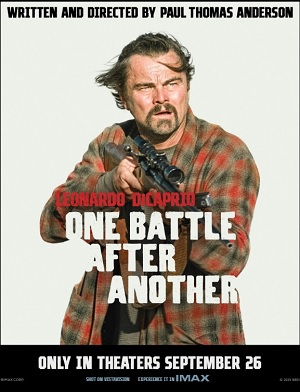
Paul Thomas Anderson continues his run of excellence with his latest film, "One Battle After Another." Loosely adapted from Thomas Pynchon's Vineland, the film is a genre-defying epic that layers action, satire, and emotional intimacy over a disturbingly present vision of America's crumbling state of affairs. Armed with the twin weapons of genuinely compelling story and a cast that shines throughout, it stands as one of Anderson's finest films, if not his best.
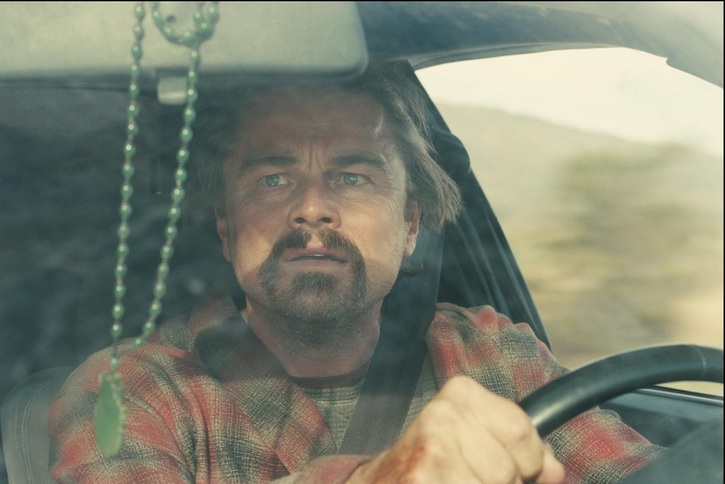
Leonardo DiCaprio delivers one of his most nuanced performances in years as Bob Ferguson, formerly "Ghetto Pat," a washed-up revolutionary turned paranoid single father. Bob is steeped in alcohol, weed smoke, and emotional fatigue, but beneath the detachment lies a fierce paternal instinct. His chemistry with breakout star Chase Infiniti, who plays his daughter Willa, forms the film's emotional anchor. Anderson has explored many families throughout his filmography, and the connection between this father and daughter is among his strongest and most textured. Their scenes, especially those depicting generational disconnect and mutual protection, are some of the most affecting in his body of work.
Teyana Taylor absolutely scorches the screen as Perfidia Beverly Hills, a revolutionary whose charisma is matched only by her volatility. Her scenes with Sean Penn's Col. Steven J. Lockjaw - especially their psychosexual power plays - are disturbing, darkly funny, and unforgettable. It's a shame the plot demands she not have more screen time. Perfidia is the catalyst for the entire story, and her presence lingers long after her final scene.
Sean Penn's turn as Lockjaw is an absolute home run. His portrayal threads the needle between grotesque caricature and chilling authenticity. As the fascist military commander obsessed with Perfidia, Penn leans into the character's mania with unnerving gusto. His entrance - coerced into sexual humiliation by Perfidia - is both absurd and disturbing, setting the tone for a performance that's equal parts power-hungry villain and deranged avatar of authoritarian masculinity. He growls, flexes, and sneers through scenes with bravado, yet never slips into full parody. It's a performance that resonates: unsettling, fascinating, and essential to the film's gravity on both macro and personal levels.
Regina Hall and Benicio del Toro round out the main ensemble with gravitas and charm. Hall's Deandra, a former comrade turned covert operative, and del Toro's Sensei Sergio, who runs an underground railroad for immigrants, add texture to Anderson's sprawling network of resistance.
Much has been said about Anderson shooting this film in VistaVision with Michael Bauman - and it shows. The film feels simultaneously expansive and immersive. From intimate scenes to wide-open vistas, it's crisp, saturated, and often surreal. The widescreen format amplifies the film's scale, rendering even the smallest and most absurd moments with precision. The production design - from border detention centers to cannibal-cultivating convents to the underground lair of the Christmas Adventurers Club - is exquisite, with each location serving as a metaphor for fascist overreach or radical hope.
Jonny Greenwood's score, like the protagonists themselves, is radical and unpredictable. It's minimalist and menacing; in one sequence, a single piano note is struck repeatedly, interspersed with chaotic flurries to underline the tension of a chase unfolding on screen. In other moments, a massive chord erupts, disorienting and dreadful. Elsewhere, the music lingers in ethereality. Greenwood's composition perfectly matches the film's chaos, spectacle, and pace, reinforcing its emotional volatility and mythic scope.
The film's use of locations throughout California adds a serendipitous dose of realism and dystopian vision, especially when overlaid with real-world events. Anderson has crafted a fictional world that serves as a dark mirror to the reality of militarized policing in California and across America.
Anderson's screenplay navigates tonal shifts with remarkable precision, blending absurdist humor, emotional gravity, and political commentary into a cohesive whole. While loosely inspired by Vineland, the narrative stands entirely on its own, with a wholly original structure and voice. It balances moments of pitch-black comedy with scenes of genuine vulnerability, satirizing authoritarianism with a sharpness that never undercuts its emotional core. The result is a script that feels both anarchic and deeply human, capable of veering from slapstick to sorrow without ever losing its footing.
The film opens with a bang - literally - as the French 75 liberate a migrant detention center, with Bob present to detonate the explosives. From there, the story plunges into lust, betrayal, exile, desperation, and reunion. The pacing is propulsive, the dialogue crackling and energetic, and the emotional beats land with devastating accuracy.
"One Battle After Another" distinguishes itself by resisting tidy emotional resolution. Its revolutionaries are deeply human - imperfect, weary, and often compromised - while their triumphs are brief and hard-won, hunted by relentless opposition. Anderson's narrative doesn't preach but opens space for reflection on extremism, inherited trauma, and the machinery of control. These themes unfold through some of the most visually arresting and narratively intricate sequences he's ever directed, where chaos and clarity collide with deliberate force.
Anderson has made his action movie here, and somehow also made a political farce, a family tragedy, and a chase movie, all of which defy convention and complacency. Most importantly, in a landscape of safe storytelling, "One Battle After Another" is a call to arms in the name of originality.
| Movie title | One Battle After Another |
|---|---|
| Release year | 2025 |
| MPAA Rating | R |
| Our rating | |
| Summary | Paul Thomas Anderson adds to his excellent body of work with this genre-defying epic that features stellar work from Sean Penn, Teyana Taylor, and newcomer Chase Infiniti, plus the most nuanced performance Leonardo DiCaprio has delivered in years. |