Tesla announced this week that all Model 3 and Model Y cars ordered after October 1, 2026 now support V2H (Vehicle to Home). This feature gives the car bi-directional charging - in other words, you will have the ability to flow power from your car battery into your home electrical system, powering your entire home during a power outage or blackout.
It's a great feature, previously available only on the Cybertruck and on some competitive EVs like the Ford F150 Lightning. But there's a catch: you still need to have one or more of Tesla's PowerWall 3 batteries installed in your home electrical system in order to activate the feature. Once enabled, your Model 3 or Model Y can provide up to 2 additional days of electricity to the average home in the U.S. (based on current energy use estimates).
Note: If you're looking into purchasing a Tesla Model 3 or Model Y, you can use our referral link to get an instant bonus such as 3 free months of Full Self Driving included with purchase
The requirement for a PowerWall makes the system more expensive, and may be disappointing to some - but it also allows you to use your car for an emergency during a blackout without disrupting your home's power. It also allows you to drive to a local Super Charger, load up your battery and bring that electricity back to power up your home for another two days. Try that with an ICE car.
You'll also need Tesla's Universal Wall Connector or a Gen 3 Wall Connector to regulate the flow of power to and from the car. The V2H feature has been enabled thanks to a new piece of hardware integrated into the car's on-board charging system - a new inverter called the "PCS2 LITE." Previously the only Tesla vehicle with V2H was the CyberTruck, which has its own "PCS2" inverter on-board.
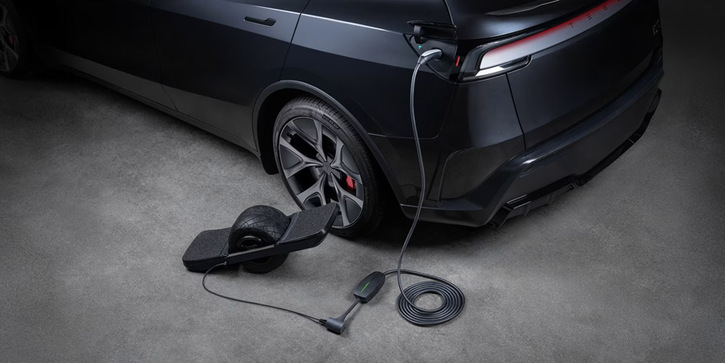
The new inverter hardware was introduced as a running change to the Model 3 and Model Y production lines some time in September without any fanfare, and is said to be included on all cars ordered after October 1.
Tesla Energy made the official announcement on X earlier this week. The announcement comes shortly after the company announced additional improvements to the Model 3 - a larger 16-inch touchscreen for all variants, improved acceleration for some models, and increased range for the Model 3 Performance. Tesla regularly introduces small improvements to its models over time, though this upgrade is a bit more substantial than most.
By adding V2H, Tesla not only enables your car to provide power in an emergency, but it also allows you to charge your car battery at night during periods of low demand (and lower cost) and use that stored electricity to power your home during the day, avoiding high peak electricity pricing. This power management is all handled within Tesla's mobile app.
The company has stated that support for earlier PowerWall batteries (e.g., PowerWall 2 and PowerWall+) will be delivered in a future update. There is no confirmation yet as to whether the PCS2 Lite inverter upgrade will be offered as a retrofit to cars manufactured prior to the change. But Tesla has already published a service guide for the Model Y on the PCS1 to PCS2 Lite inverter upgrade, so we suspect it will be made available as an upgrade for current generation Model 3 and Model Y at some point in the future.
The V2H feature is a key advantage to EVs as the batteries used in most electric cars are typically 4 or 5 times the capacity of what we normally see in home backup batteries. For example, the Model Y Premium currently comes with a battery with 75 to 81 kWh (KiloWatt Hours) of usable energy storage, while a single Tesla PowerWall 3 battery only offers 13.5 kWh or electricity. Having to buy multiple PowerWall batteries just to match the storage capacity of a car you already own seems like a waste of money.
By enabling V2H, Tesla is giving its customers the ability to provide uninterrupted power to their homes for days in the result of a blackout, without having to buy tens of thousands of dollars worth of dedicated home batteries or having to install a fossil-fuel powered generator system that requires constant maintenance. While we would love to see a V2H option that does not require an additional PowerWall battery, this is certainly a good start and can help home owners get a sense of "power security" without a high initial investment.